

Thursday, 14.05.2026
18.00 LECTURE
COMICS AND ARCHITECTURE – OBSCURE CITIES
About the graphic novel series Les Cités obscures, Benoît Peeters & François Schuiten
Participants: Benoît Peeters, Anđelka Bnin-Bninski, Pavle Zelić
→ Artget Gallery, CCB, Republic Square 5/1
Benoît Peeters, born in 1956 in Paris, is a French writer, comics theorist and screenwriter. He studied philosophy at the Sorbonne and defended his master’s thesis under the mentorship of Roland Barthes at EHESS. He is best known for his long-term collaboration with the Belgian cartoonist François Schuiten, with whom he created a series of graphic novelsObscure Cities (Les Cités obscures, Casterman, Paris), in which architecture plays a central role. The first album from the series was published in 1983. The last one, which was published in France in 2023, is called The Return of Captain Nemo, and was recently published in Serbian (Lokomotiva). Together, the authors explore utopian and dystopian visions of cities, combining real architectural trends, such as Art Nouveau, modernism and futurism, with fantastical worlds. Peeters is also the author of essays and studies on Hergé, the creator of the famous comic book hero Tintin. In addition to comics, he also worked on film, documentaries and the restoration of architectural monuments, such as the Maison Autrique in Brussels. He is visiting professor of graphic fiction and comic art at Lancaster University in the United Kingdom. His biographies of Jacques Derrida and Sandor Ferenci (Karpos) were published in Serbian. He is visiting Serbia at the invitation of the French Institute, as an honored guest of the Moliere Days festival.
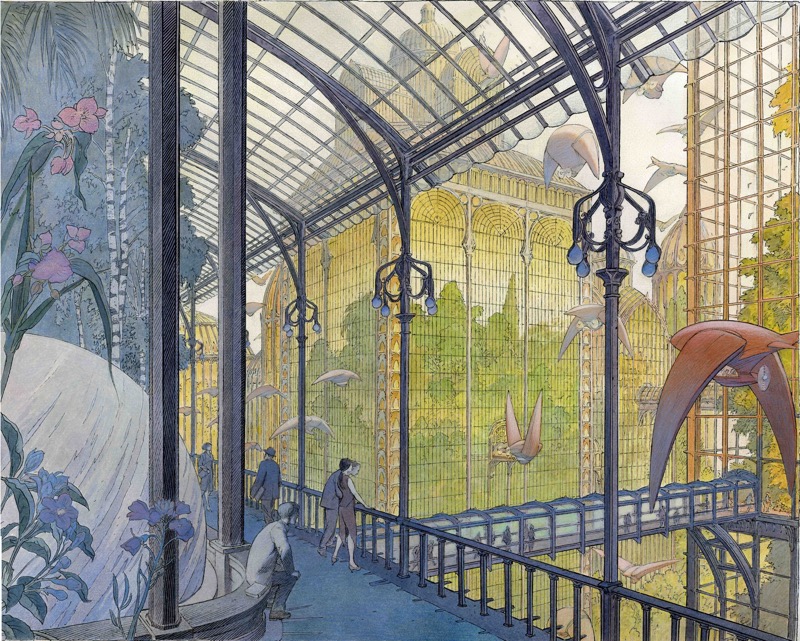
The graphic novel series Les Cités obscures (Obscure Cities), created by Benoît Peeters and François Schuiten, represents a unique meeting place of comics and architecture. In this cycle, cities and buildings are not just scenery, but key narrative elements that shape society, atmosphere, and the flow of the story. The authors draw inspiration from the history of architecture and art, especially from the works of architects such as Victor Horta, Antonio Sant’Elia, Le Corbusier, as well as from the imaginative spaces in Piranesi’s engravings. This combination of realistic architectural references and fantastic narrative creates a parallel world where architecture becomes a means of exploring utopian and dystopian visions of the modern city. In this way, Les Cités obscures show how comics can function as a space for thinking about urbanism, the history of architecture and the culture of space, and how architecture can become a key element of visual storytelling in the ninth art.